Exports from Belarus to China
routes, documents, and cargo preparation
How to prepare an export shipment from Belarus to China: verify the buyer and product requirements, select a route, compile the documents, and arrange shipment control.
July 1, 2026 · 11 min read
How to prepare an export shipment from Belarus to China: verify the buyer and product requirements, select a route, compile the documents, and arrange shipment control.
Verifying product access to the Chinese market
The exporter’s first question is whether the selected buyer is permitted to import the specific product into China through the intended entry point. Requirements depend on the product category, composition, intended use, manufacturer, and method of use. Certain categories may require establishment registration, permits, certificates, and sanitary or phytosanitary procedures. The Chinese partner must provide documentary evidence of its import authority and the applicable local requirements.
Before producing the shipment, the parties agree the product’s Chinese name, classification code, marking, label language, composition, and document list. The translation must preserve the technical and commercial meaning. If the buyer asks to change the description to simplify customs clearance, the exporter should verify that the change is lawful and accurately reflects the actual product. An error at this stage can hold the cargo after substantial production and transport costs have already been incurred.
Questions for the Chinese buyer before confirming the order
- who will act as the importer and consignee in China;
- which product code and official product name have been agreed;
- which registrations, permits, and certificates are required;
- which point of entry and customs procedure are planned;
- which packaging and marking requirements apply;
- who is responsible for translation, data submission, and liaison with the Chinese authorities.
How to select a route from Belarus to China
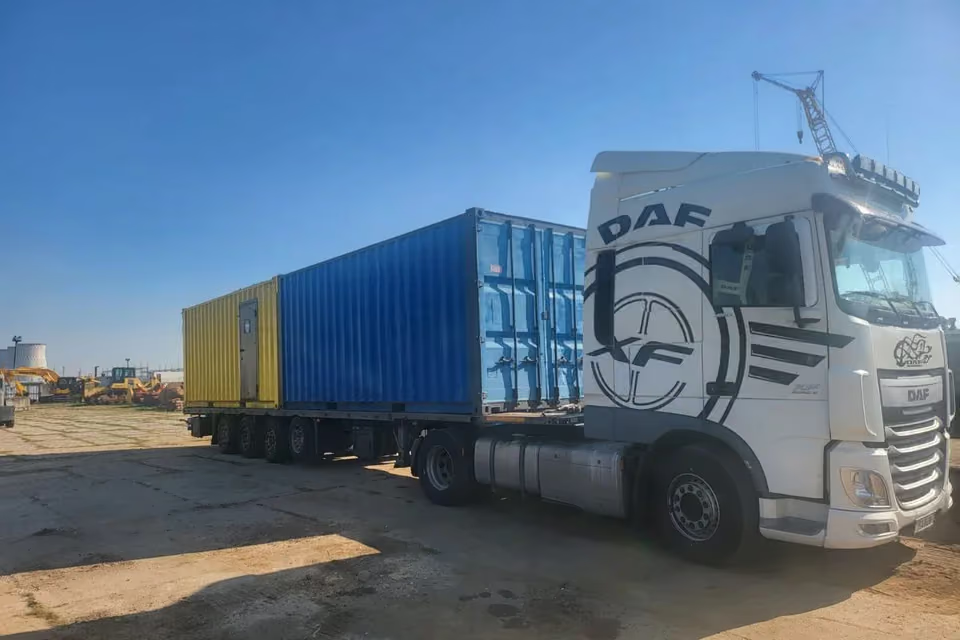
Road transport is suitable when direct delivery to a specified address, flexibility, and fewer terminal operations are priorities. Rail container transport works for shipments compatible with container handling requirements and terminal schedules. A multimodal arrangement extends the range of destinations but introduces additional transshipments and parties. The choice should not be based on the transport mode alone: the destination province, service availability, cargo properties, and last-mile conditions in China must all be assessed.
In April 2026, the Ministry of Transport and Communications of Belarus reported the departure of the Kolosok consolidated container train from Kolyadichi station. According to the official publication, the train consisted of 40-foot containers carrying products from Belarusian companies, and the route ran through Russia and Zabaikalsk to Shaanxi and Jiangsu provinces. The source confirms that this specific project existed, but the operator must confirm cargo acceptance terms, schedules, and capacity for any new shipment as of the planning date.
Preparing the products and packaging
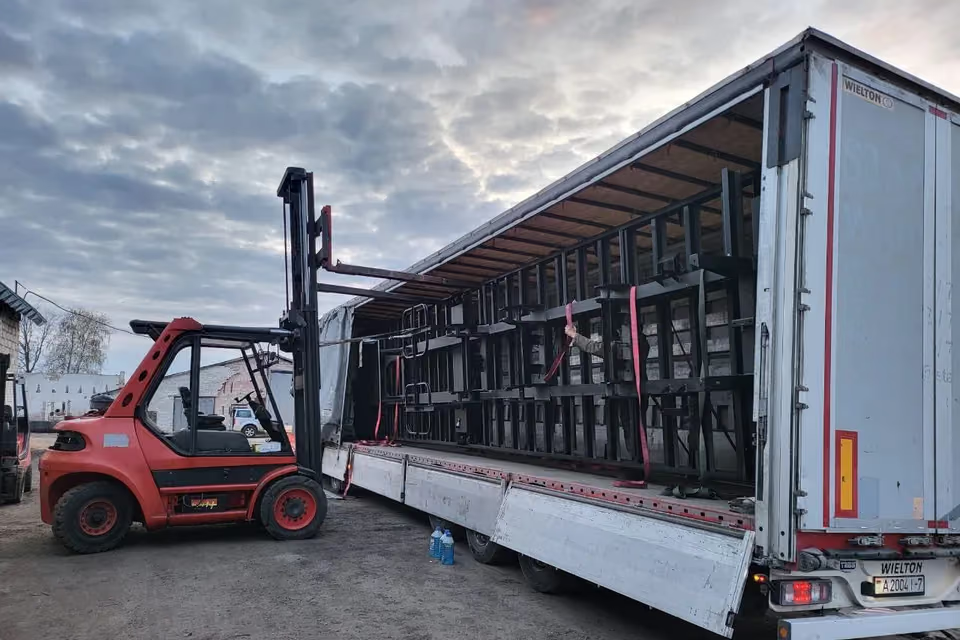
Export packaging must withstand the entire route, including storage, vibration, changes in environmental conditions, and transshipments. For container shipments, the parties check weight distribution, safe securing arrangements, and protection against shifting. Wooden crates and packaging materials may be subject to phytosanitary requirements. Food products, raw materials, chemicals, and equipment require different protection methods, so a generic recommendation to “reinforce the crate” is insufficient.
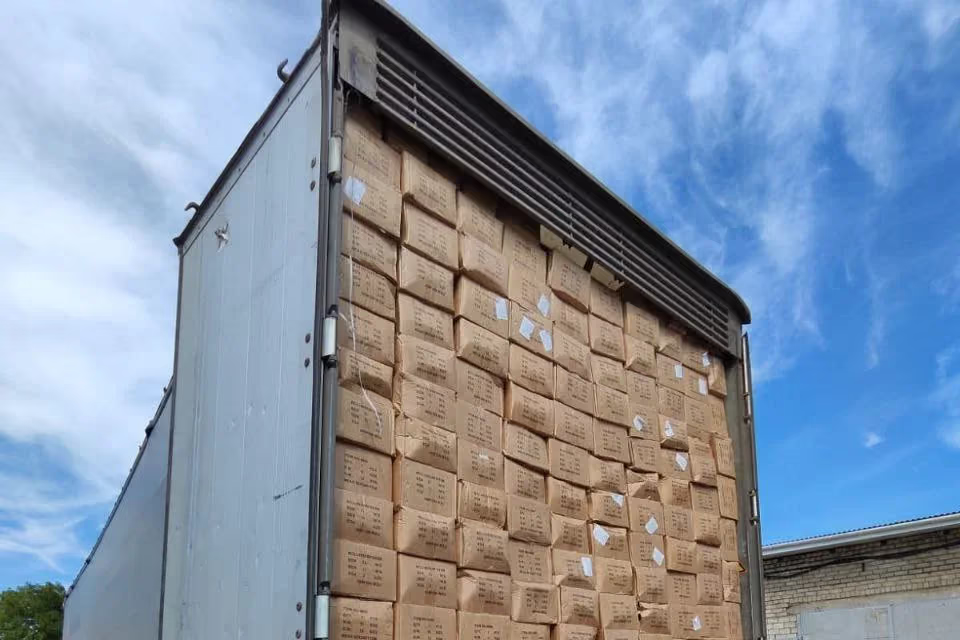
Cargo marking links each physical package to the shipping documents. Every package should bear the agreed identifiers, package number, consignee details, and required handling marks. Before closing the container or vehicle body, a photographic record should document the goods’ condition, packaging, marking, stowage, securing, and seal. If the contract requires inspection, the procedure and acceptance criteria should be established in advance.
Bystrox · Belarus and China
Calculate route and cost
Share the cargo details, route points, and target dates. Our team will clarify the requirements and propose a workable transport plan.
Foreign trade contract and export documents
The foreign trade contract should define the subject matter, price, currency, payment, delivery term, acceptance, claims procedure, and required documents. The specification details the product range and characteristics. The commercial invoice and packing list are prepared for the actual shipment. The appropriate transport document is issued for the selected route. The export declaration and other data are submitted in accordance with the applicable requirements of Belarus and the EAEU.
Documents evidencing origin, quality, and safety should be checked separately when required by the contract or applicable rules. A certificate of origin should not be treated as conferring an automatic preference: the applicable treatment and the document’s acceptability must be verified for the specific transaction. The agreed document set should reach the Chinese partner before the cargo arrives so that the partner can cross-check the data and prepare the import clearance.
Payment, Incoterms, and allocation of responsibilities
The selected Incoterms rule governs a significant part of the allocation of logistics obligations and risks, but it does not resolve every issue in the transaction. The contract should separately state the timing and basis of payment, documents required by the bank, transfer of title, acceptance procedure, and settlement of discrepancies. The exporter needs to understand where its obligation to arrange transport ends and what evidence of performance it will receive.
A long logistics chain should have one coordinator with visibility of the documents, bookings, and cargo status. Even when the buyer arranges the main transport leg, the Belarusian seller should control the handover of the goods and documents within the scope of its contractual obligations. Financial, foreign-exchange, and tax requirements depend on the current regulations and transaction terms and should be checked with the bank and specialist advisers before payment.
Export shipment readiness checklist
- verify the Chinese importer and the product requirements;
- agree the code, description, composition, marking, and documents;
- select a route to the actual delivery and receipt point in China;
- check the packaging, weight distribution, and cargo securing;
- cross-check the contract, specification, commercial invoice, and packing list;
- confirm the booking and cargo acceptance rules at each terminal;
- send the documents to the Chinese partner before the cargo arrives;
- define the control milestones and the response procedure for deviations.
For the first shipment, it is prudent to allow extra time to verify requirements and exchange corrected documents without presenting that contingency as a guaranteed deadline. After completing the project, the company should retain not only the files but also a record of the actual process: which data were requested, where discrepancies arose, and which document versions were accepted. A repeat shipment becomes faster only when the conditions remain unchanged and the current rules are verified again.
Key points in 30 seconds
- An export project begins by verifying China’s requirements for the specific product and importer—not by booking transport.
- Road, rail, and multimodal routes are compared by the buyer’s location, shipment size, transshipment requirements, and schedule reliability.
- The contract, export documents, cargo marking, and Chinese importer details must be agreed before dispatch.
- An official Ministry of Transport report confirms the development of a consolidated container service from Kolyadichi, but does not guarantee availability for every shipment.
Questions on this topic
What is the best route from Belarus to China?
There is no universal solution. The choice depends on the origin and destination addresses, shipment size, cargo properties, acceptable transshipments, service availability, and the buyer’s requirements.
Can a small shipment be sent by rail?
Consolidated container transport may be possible when a suitable service is available and the cargo is accepted for carriage. The operator must confirm the current terms and schedule.
Are the Chinese buyer’s requirements sufficient?
They must be verified and agreed with the parties involved in declaration, customs clearance, and delivery. The parties’ responsibilities should be recorded in the contract, and the requirements reconfirmed as of the shipment date.
Who handles import clearance in China?
Usually the Chinese importer or its authorized representative. The precise allocation of responsibilities depends on the transaction and the agreed delivery term.
Need a route quote?
Share cargo details and deadlines — we will propose a transport plan and commercial offer.