Manzhouli–Zabaykalsk
Route, Documents, and Causes of Delay
How to prepare a road shipment via Manzhouli and Zabaykalsk: route design, document set, transshipment control, and delay management.
February 7, 2026 · 9 min read
How to prepare a road shipment via Manzhouli and Zabaykalsk: route design, document set, transshipment control, and delay management.
How the Manzhouli–Zabaykalsk Route Works
Manzhouli is on the Chinese side of the border and Zabaykalsk on the Russian side. Both road and rail flows pass through this gateway, but the operating model depends on the mode, vehicle authorisation, carrier agreement, and current rules. In a road movement, cargo may remain on one vehicle or be handed over between route participants. The location and method of handover must be known in advance because they affect packaging, sealing, documents, and liability.
After crossing the China–Russia border, the cargo continues through the EAEU to Belarus. This does not remove control procedures or mean that every product may be imported without restriction. The customs procedure, place of declaration, transit arrangement, and security are determined for each shipment. Agree the model with the carrier and customs representative before sending the truck to the supplier.
Documents to Prepare Before Dispatch
The basic commercial set normally includes the foreign trade contract, specification, commercial invoice, and packing list. The relevant transport document is issued for carriage. Depending on the goods and procedure, conformity declarations or certificates, licences, permits, origin information, phytosanitary or veterinary documents, and dangerous-goods documents may be required. Having the files is not enough: the data must be consistent across them.
Check the following especially carefully:
- product names, models, part numbers, and intended use;
- package count, units, net weight, and gross weight;
- value, currency, delivery terms, and party details;
- packaging description, package markings, and seal numbers;
- information affecting classification and permit requirements.
Why Delays Occur
The cause of a delay should be identified precisely. A “border queue” may mean waiting for vehicle admission, late document submission, additional control, a mismatch between actual cargo and declared data, insufficient handling space, or a late onward carrier. Seasonality, holidays, weather, traffic restrictions, and available throughput also affect the situation. Public reports of average queue lengths become outdated quickly and cannot support a promise for a specific shipment.
Common sources of deviation:
- the supplier changed the packaging, quantity, or weight after booking confirmation;
- the invoice and packing list use different units or descriptions;
- batteries, liquids, or components not disclosed in advance were found in the goods;
- the vehicle, driver, or permits do not match the selected operating model;
- an inspection was ordered or additional information requested;
- the next transport leg is not ready to accept the cargo after crossing.
Bystrox · Belarus and China
Calculate route and cost
Share the cargo details, route points, and target dates. Our team will clarify the requirements and propose a workable transport plan.
Reducing Downtime Risk Before Departure
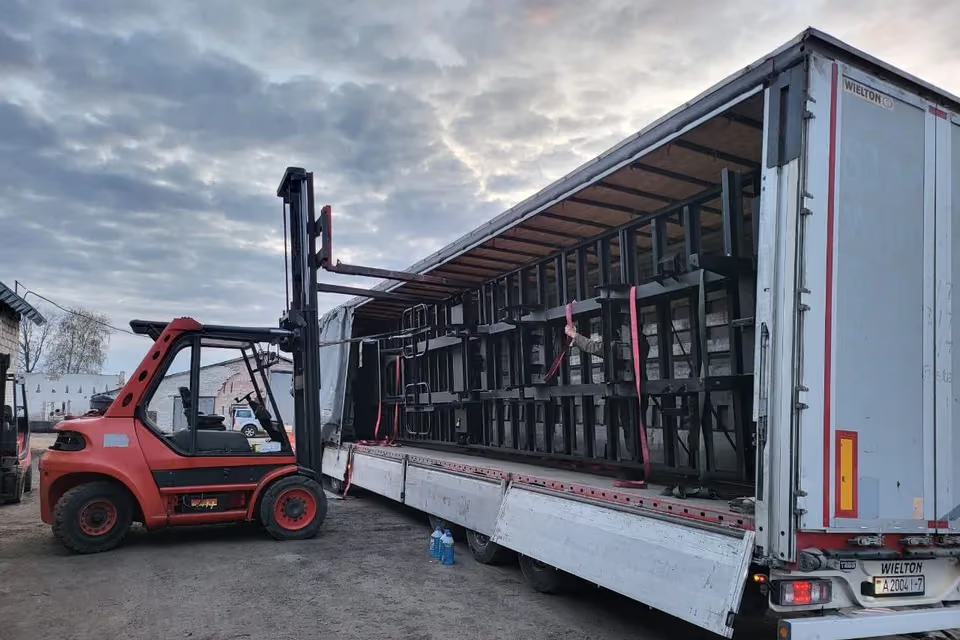
First, book transport early once the actual readiness date is confirmed. Second, photograph the cargo and markings before loading. Third, have the transport and clearance parties pre-check the documents. If transshipment is planned, specify the location, permitted handling method, crane or forklift requirements, package-count verification, and resealing procedure in the booking.
Do not dispatch a truck merely to meet a nominal date if the documents are not ready. Correcting an error at the supplier’s warehouse is usually easier than after arrival at the border. For complex goods, prepare the technical description, photographs, composition, and intended use in advance. Final classification and control decisions rest with the competent authorities, so a working description does not replace official documents.
Status Updates the Customer Actually Needs
- cargo received: date, vehicle, package count, and packaging condition;
- export formalities completed, or outstanding items identified;
- vehicle arrived at the control point and received its next status;
- border crossed, with seal and package count confirmed;
- transit or import clearance started and completed;
- delivery date to the consignee agreed.
“Cargo in transit” is not enough to manage risk. A status update should state a verified event, time, cause of deviation, and next action. If a delay occurs, the customer needs options rather than assumptions: wait, provide information, replace a document, change the handling point, or switch the onward leg. Record the decision together with its financial impact.
Building a Realistic Plan
Calculate the target date by stage rather than as one aggregate figure: supplier readiness, vehicle positioning, export operations, movement to the border, crossing processing, onward transit, clearance, and delivery. Assign an owner and acceptable variance to each stage. Time buffers are particularly important before holidays, during seasonal peaks, and for goods requiring additional controls.
Actual timing depends on the route, season, available carrier capacity, border conditions, and customs processing. Before dispatch, verify checkpoint operating arrangements, restrictions for the selected transport, the product’s permit regime, and current EAEU, Chinese, and transit-territory requirements. This does not eliminate external risks, but it prevents delays caused by controllable errors.
Key points in 30 seconds
- Before departure, reconcile the product details across all commercial and transport documents.
- A delay may occur before the border, at the checkpoint, during transshipment, or in customs control.
- The plan should include a time buffer, escalation procedure, and verified status for every stage.
- Verify current crossing procedures and document requirements before every shipment.
Questions on this topic
Must a border-crossing slot be booked in advance?
Admission procedures depend on the transport mode and the checkpoint’s current operating process. The carrier must verify the current procedure immediately before the trip; no single rule applies to every shipment.
Can an exact border-crossing time be stated?
No. Processing depends on traffic levels, documents, and control decisions. The correct approach is to provide a planning range and update the forecast after verified milestones.
What if the actual weight differs from the packing list?
Stop dispatch and correct the document set before further movement. Agree the correction procedure with the supplier, carrier, and clearance specialist.
Who is responsible for the product documents?
Responsibilities are allocated by the contract and booking, but the importer must ensure that the information is sufficient for import. Merely sending files to the carrier does not transfer all responsibility.
Need a route quote?
Share cargo details and deadlines — we will propose a transport plan and commercial offer.