Oversized Cargo from China
How to Transport Equipment and Production Lines
Step-by-step preparation for moving equipment from China: cargo manifest, drawings, packaging, loading, permits, route planning, and acceptance.
February 12, 2026 · 10 min read
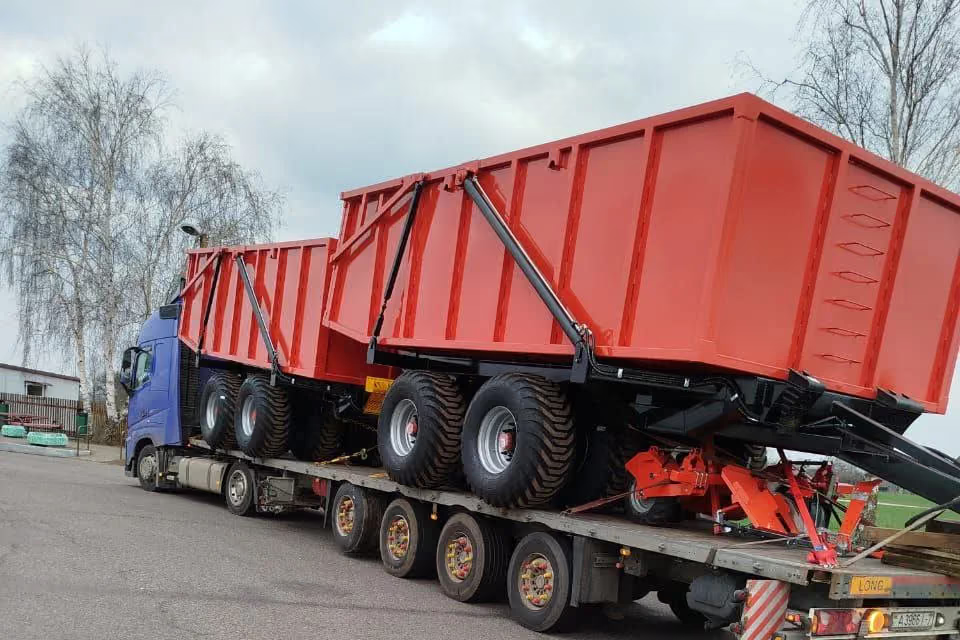
Step-by-step preparation for moving equipment from China: cargo manifest, drawings, packaging, loading, permits, route planning, and acceptance.
Where an Equipment Transport Project Begins
A production line is not one package but a set of interconnected assemblies, cabinets, frames, piping, tooling, and spare parts. Some components may fit standard transport while others exceed permitted dimensions or loads. The first step is therefore a cargo manifest listing each package, its dimensions, weight, centre of gravity, lifting points, permitted orientation, and sensitivity to moisture, impact, or tilt.
Manufacturer data should be verified after final packing. A wooden case, frame, and protective structure increase both dimensions and weight. An error in just one heavy package can change the trailer type, crane, securing plan, or entire route. Request drawings, photographs, lifting instructions, and centre-of-gravity markings for critical assemblies. Missing data is a project risk in its own right, not a reason to insert estimates.
Engineering Assessment and Dismantling Options
Before selecting transport, determine whether a large assembly can be safely separated into parts. Dismantling may convert an oversized package into standard cargo and reduce special handling. A carrier must not be expected to dismantle equipment independently without manufacturer documentation. Warranty terms, factory connections, cable identification, preservation, and accurate site reassembly all need consideration.
The technical brief should specify:
- dimensions and weight of each package before and after packing;
- centre-of-gravity coordinates and approved lifting points;
- limits for tilt, vibration, temperature, and precipitation;
- dismantling, preservation, and subsequent assembly requirements;
- dispatch sequence where installation requires a specific order;
- component values and the required insurance cover.
Route, Transport, and Permits
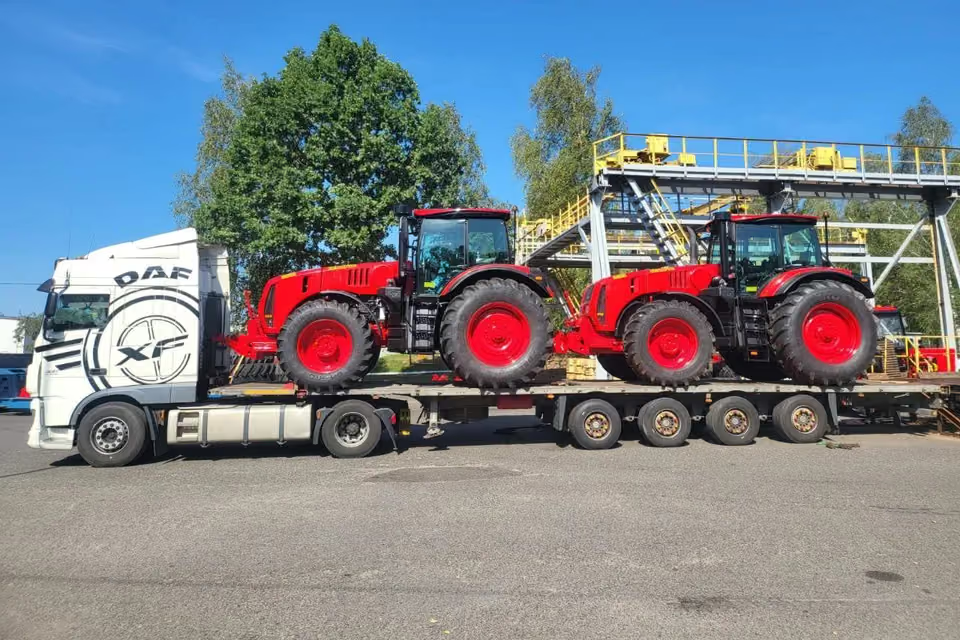
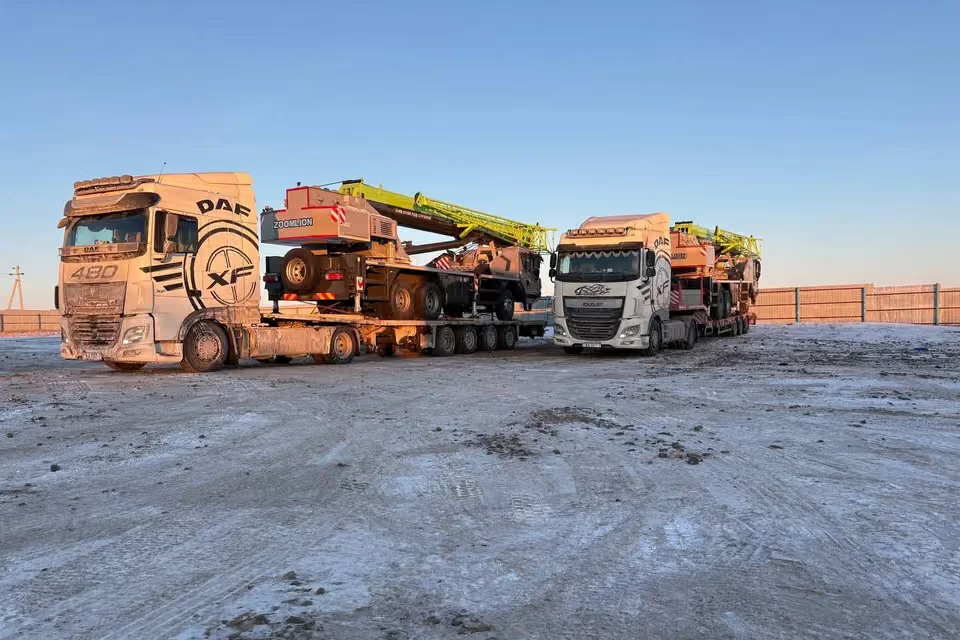
Select the trailer type only after analysing the cargo and route. Consider not only equipment length, width, and height, but also axle loads, deck height, securing options, and access to the loading point. Then assess roads, bridges, tunnels, overhead power lines, roadworks, and local restrictions. Oversized or heavy-haul movements may require special permits and escorts; rules vary by country and route segment.
An international route may involve changing the tractor unit, trailer, or transport mode. Every transshipment raises site and equipment requirements. Where a project crosses several jurisdictions, permits and lead times must be planned separately. A permit from one country cannot be extended to another, nor can a previous route be assumed available: restrictions, roadworks, and permitted parameters may change.
Bystrox · Belarus and China
Calculate route and cost
Share the cargo details, route points, and target dates. Our team will clarify the requirements and propose a workable transport plan.
Packaging, Loading, and Securing
Packaging must protect the equipment while allowing safe handling. For sea or multimodal legs, moisture and corrosion protection, sealing of sensitive parts, and condensation control are particularly important. The support frame must be engineered for the weight and load points. Markings should identify each package without opening it and indicate centre of gravity, upright orientation, no-stacking instructions, and lifting points where applicable.
Before loading, check:
- site readiness and the load-bearing capacity of access roads;
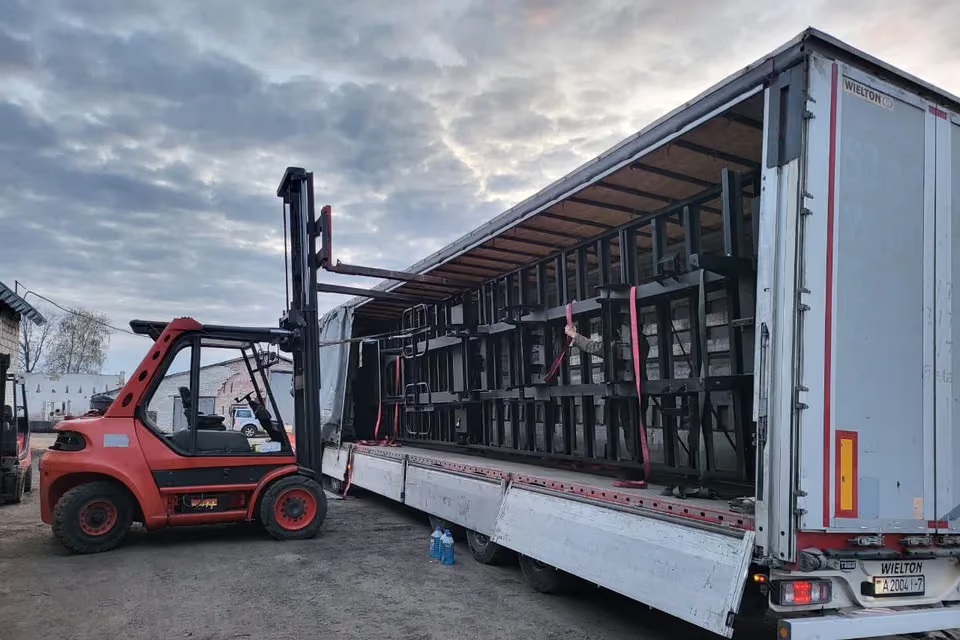
- whether the crane or forklift is rated for the load and lifting radius;
- availability of serviceable slings, spreader beams, chains, and securing equipment;
- the trailer stowage plan and load distribution;
- photographic records before lifting and after securing;
- protection of protruding and sensitive parts from contact with securing equipment.
Documents and Customs Description of the Line
The contractual term “line” does not always match the customs description. Clearance requires clear information on functions, composition, models, manufacturer, materials, and value. Classification of the set or its individual components should be addressed before dispatch. A technical passport, specification, drawings, photographs, catalogue, and process explanation may be useful. The list is not universal and depends on the equipment.
Also check EAEU technical-regulation requirements and whether the equipment contains components subject to separate controls, such as radio modules, pressure vessels, oils, refrigerants, batteries, or chemicals. Wood packaging may be subject to phytosanitary requirements. Confirm the current document set with the customs representative and conformity assessment body before paying the supplier’s balance.
Site Acceptance and Project Management
Delivery does not end at the gate. The consignee should verify turning radii, gate width, clearance height, surface strength, unloading space, and temporary storage options in advance. Book the crane and installation crew with a reasonable time window because actual arrival depends on the route, season, carrier availability, border, and customs processing. Rigid hourly scheduling without a buffer creates downtime for equipment and personnel.
The project coordinator maintains one controlled cargo manifest, a decision log, and a milestone calendar. Supplier changes—an extra case, revised weight, or different packaging—require a fresh technical assessment. Before dispatch, check current road restrictions, permits, import requirements, and local unloading rules. This material describes an organisational approach and does not replace engineering calculations or official permits.
Key points in 30 seconds
- The project starts with an itemised equipment list, drawings, and verification of actual post-packaging dimensions.
- Dismantling an assembly may simplify the route, but the manufacturer decides with warranty and subsequent installation in mind.
- Loading, securing, transshipment, and unloading must be engineered as one continuous chain.
- Permits and restrictions must be checked for every country and every route segment before dispatch.
Questions on this topic
When is cargo considered oversized?
This is determined by the dimensions and weight of the loaded vehicle and the rules of the relevant country or route segment. Assessment follows receipt of the packed item’s actual dimensions and weight.
Can a machine be dismantled before transport?
Only with the manufacturer’s approval and a documented method for dismantling, preservation, and reassembly. Warranty coverage and component identification must be maintained.
Who develops the cargo securing plan?
A competent party with data on the cargo, trailer, and regulatory requirements. Complex equipment may require a separate engineering calculation.
Can installation be included in the transport contract?
Installation is a separate scope of work. It may be coordinated within one project, but duties, qualifications, liability, and acceptance must be clearly separated in the contract.
Need a route quote?
Share cargo details and deadlines — we will propose a transport plan and commercial offer.