Heavy equipment transport from China
excavators, loaders and road construction machinery
A practical guide to transporting heavy equipment from China: technical data, dismantling, securing, oversized transport, documentation, cost and receipt.
May 12, 2026 · 11 min read
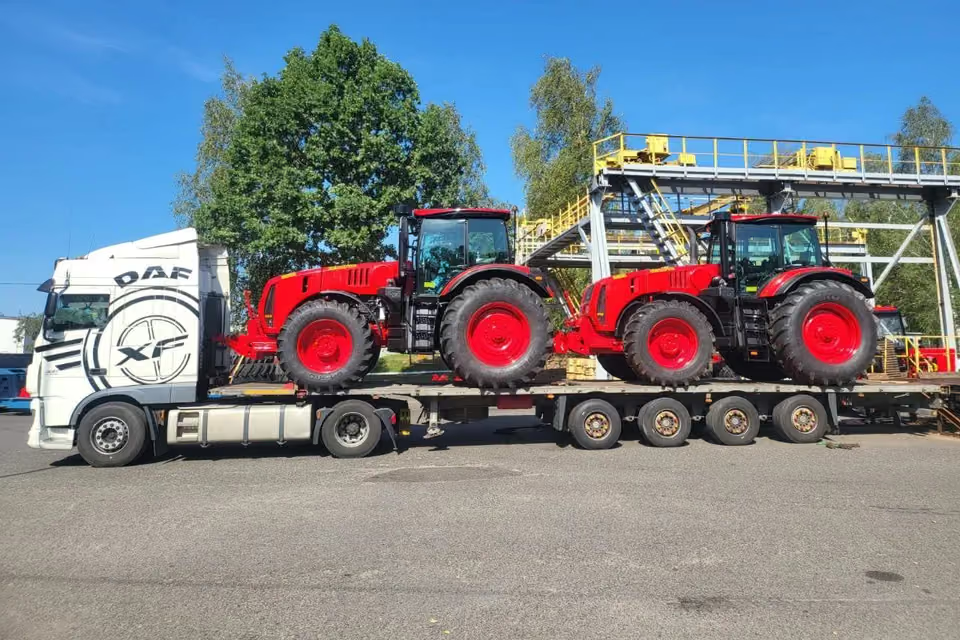
A practical guide to transporting heavy equipment from China: technical data, dismantling, securing, oversized transport, documentation, cost and receipt.
Why the model name alone is insufficient for a quotation
An excavator, wheel loader or paver from the same series may be supplied with different booms, buckets, cabs, tyres and counterweights. A quotation based only on a catalogue link is therefore preliminary. The quotation requires actual dimensions in the transport position, operating and transport weights, load distribution at the support points, minimum ground clearance, centre of gravity and a diagram of approved lifting and securing points. The manufacturer or supplier must confirm the data.
Describe the machine’s operating condition separately. Confirm whether it can drive onto the platform under its own power, whether the brakes and steering work, whether any fluids are leaking, whether the battery is charged and whether the engine starts. Non-running machinery requires a winch, crane or another loading method. A hidden defect during loading endangers people and equipment, so broad descriptions such as “new” or “working” are insufficient.
Minimum information required for a quotation
- Make, model, serial number and intended use of the machinery.
- Drawing showing dimensions in the transport configuration and the weight of each cargo piece.
- Photos from all sides, attachments and underside.
- Centre of gravity and manufacturer-approved lifting and securing points.
- Addresses, site conditions, available handling equipment and preferred dates.
- Information about fuel, batteries, fluids and other regulated components.
Disassembly and transport configuration
Removing the bucket, boom, cab, wheels or counterweight may reduce the height, width or weight of the main cargo piece and open additional route options. Dismantling does not always reduce total cost: it creates additional cargo pieces, crane work, packaging, risk of damage to connections and subsequent reassembly. The decision is made after comparing the total cost of the two configurations, and the operations are performed according to the manufacturer’s instructions by qualified specialists.
Identify each removed part in accordance with the assembly diagram. Cap hoses and connectors against contamination, collect and label fasteners, and protect working surfaces. Heavy attachments require their own supports and securing; they cannot simply be treated as spare space on the platform. Before dispatch, confirm that the consignee has the crane, tools, consumables and documentation needed to reassemble the machinery safely.
Container, curtainsider, platform or low-loader
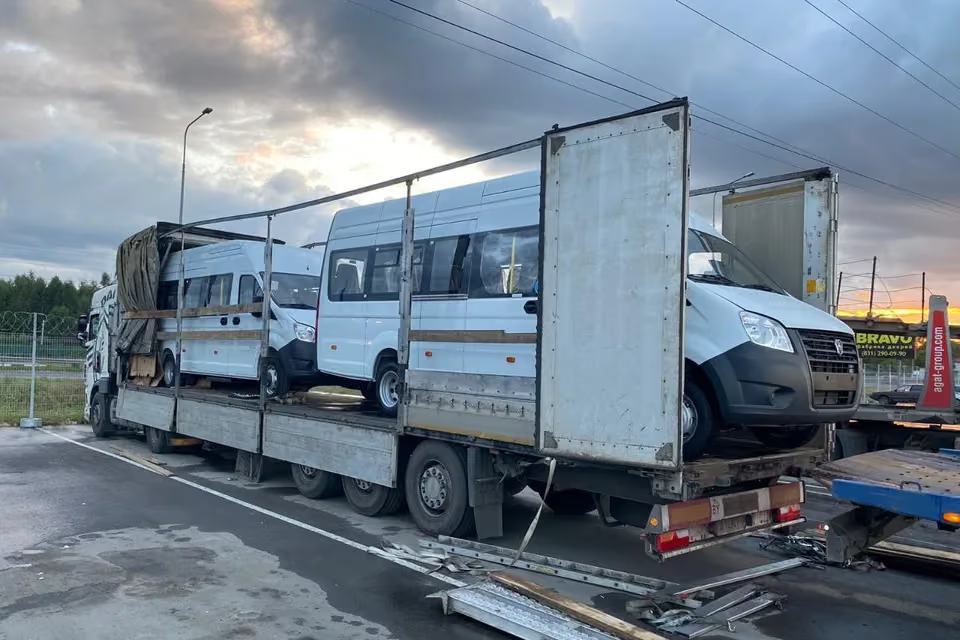
After preparation, compact machinery may fit in a standard or High Cube container if it meets the door dimensions, weight limits and securing requirements. Enclosed transport protects against the external environment but can restrict access to securing points. A standard curtainsider is suitable only within its permitted dimensions and loads. Tall, wide, heavy or tracked machinery often requires a platform or low-loader.
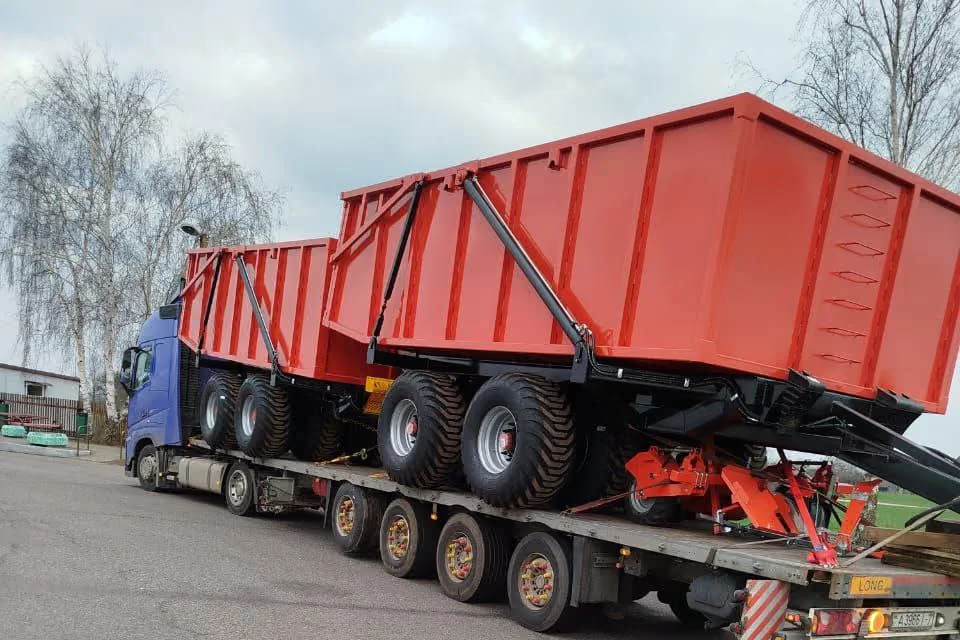
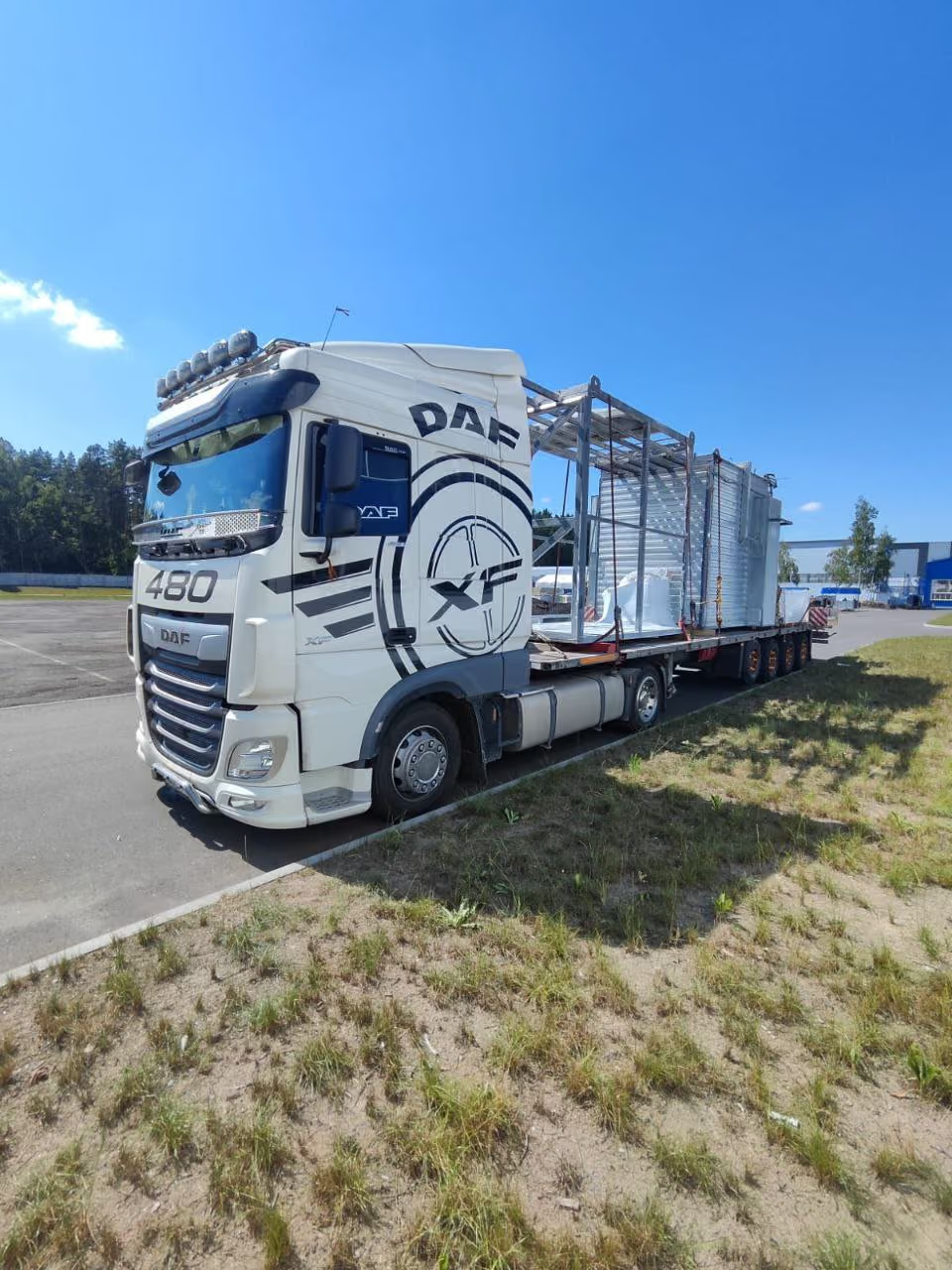
Platform type is selected for the complete transport configuration and route. A low loading deck may reduce the overall height of the vehicle combination, but overall length, loading angles and axle-load distribution remain critical. Self-propelled loading is permitted only with a safe ramp, adequate traction and guidance from the responsible person. The deck is protected from tracks and wheels where necessary, while booms and articulated sections are secured in the transport position.
Oversized transport and route approval
Oversized or heavy-transport status is determined from the actual dimensions and weights of the loaded vehicle combination and the rules in every country on the route. A single numerical threshold cannot be applied across an international corridor. Once the platform is selected, the route engineer checks permitted weights and axle loads, structure clearances, road widths, turning radii, roadworks, seasonal restrictions and access through control points.
Depending on the route, special permits, approvals, pilot vehicles, escorts or restrictions on travel times may be required. Authorised authorities and specialist participants in each jurisdiction confirm the applicable requirements. The logistics provider coordinates data collection and applications but cannot guarantee when a permit will be issued or what the authority will decide.
Recheck the route immediately before departure: a temporary restriction, bridge repair or weather change may invalidate the previous plan. Include time for route surveys and approvals in the schedule. For a critical delivery, consider a contingency route or a different degree of dismantling, but do not dispatch the machinery until every required approval has been obtained.
Bystrox · Belarus and China
Calculate route and cost
Share the cargo details, route points, and target dates. Our team will clarify the requirements and propose a workable transport plan.
Loading, securing and in-transit checks
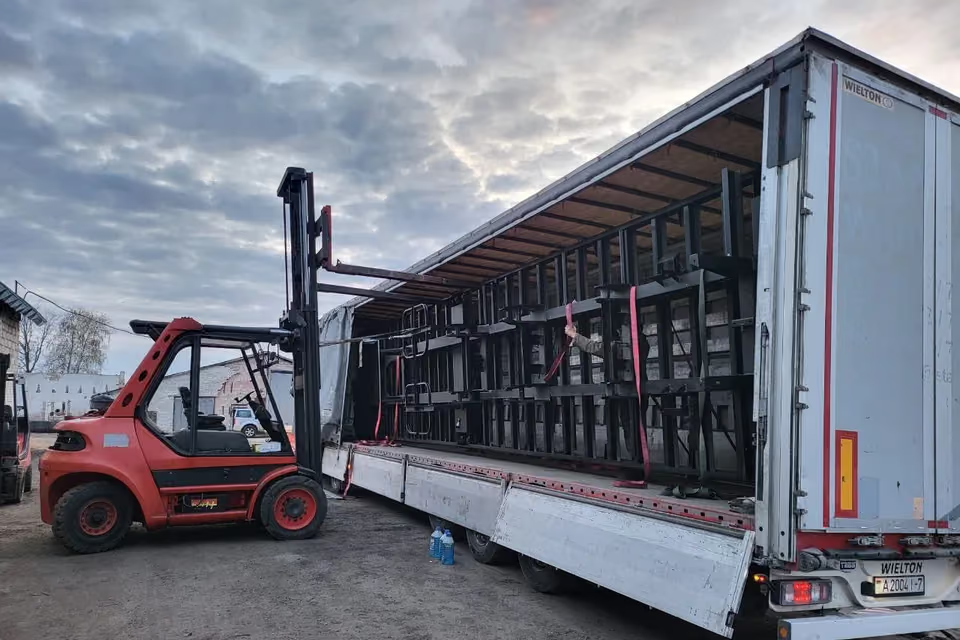
Before work starts, conduct a safety briefing and assign roles. The site must support the machinery’s weight and provide sufficient space and lighting. Load according to the agreed plan with no personnel in the danger zone. Once positioned, verify the centre of gravity and load distribution. Lower or secure the working attachments, lock articulated sections as instructed, and hand the keys and controls to the responsible person.
The securing calculation and instructions determine the number and specifications of chains, straps, chocks and anti-slip materials. Securing devices must not pass over vulnerable pipework, cylinders or cab components. After initial movement, the fastening is checked in a safe location, then monitored at specified intervals and after events that could weaken it. Photo recording complements, but does not replace, physical verification.
Documents, cost and timing
Commercial and transport documents must describe the machine and every removed part consistently. Verify serial numbers, number of cargo pieces, weight and value before dispatch. Import may require evidence of conformity, origin, safety or other characteristics. The required documents depend on the machinery’s type, intended use, condition and classification; confirm them in advance with a customs representative and the competent authorities. Transport advice does not replace a customs or legal opinion.
The total cost comprises collection, dismantling and packaging, crane work, transport equipment, permits, escorts, transit, transshipments, insurance and unloading. Seasonality, platform availability and route changes also affect the price. Lead time includes preparing the machinery and documents, engineering, approvals and the actual movement. Therefore, the final calculation is possible after receiving technical data, and the calendar is indicated as a range with a reserve.
Receiving the machinery on site
The recipient prepares the site, crane or ramp, personnel and location for the removed parts in advance. Before unloading, documents, seals and visible condition are checked, fastenings and possible traces of displacement are photographed. Unloading is carried out according to a separate plan, because removing fasteners can change stability. Start-up is carried out after inspecting the levels, battery, connections and removing all transport locks according to the manufacturer's instructions.
Final project check
- Drawings and photographs confirm the actual transport configuration.
- Loading, securing, routing and unloading plans have been agreed.
- Permits and mandatory documents have been verified by relevant specialists.
- Insurance is appropriate for the value, machinery type and transport method.
- The schedule includes time for preparation, approvals and external delays.
- The recipient is prepared to safely accept, assemble and inspect the equipment.
Key points in 30 seconds
- Planning begins with manufacturer data on the transport configuration, weight, dimensions, centre of gravity and securing points.
- Partial dismantling can reduce the transport envelope but requires part identification, protective packaging and a reassembly plan.
- Oversized status and permit requirements must be determined for the actual transport configuration in every country on the route.
- Cost and lead time depend on the machinery, route, transport equipment, required approvals, transshipments and seasonal availability.
Questions on this topic
Do I need to disassemble the excavator before transporting it?
Not always. Compare dimensions and weight in assembled and partially disassembled form, available transport, route and cost of work. The decision is made based on the manufacturer’s data and design calculations.
Can heavy equipment be transported in a container?
Yes, provided the transport configuration fits through the door, remains within the internal dimensions and weight limits, and can be properly secured. Larger machinery usually requires other transport equipment.
Who gets an oversize permit?
The contract assigns responsibility for preparing the application, while the competent authority in the relevant country issues the permit. Confirm requirements and lead times for the specific route.
What determines the price the most?
Primarily the weight and dimensions, degree of dismantling, platform type, route, permits, escort requirements, loading work, seasonal availability and insurance terms.
What documents are needed to import special equipment?
The composition depends on the classification, purpose, condition and characteristics of the machine. It is confirmed with the customs representative and relevant authorities before shipment.
Need a route quote?
Share cargo details and deadlines — we will propose a transport plan and commercial offer.