Refrigerated freight from China to Belarus
temperature control and the cold chain
How to prepare temperature-sensitive cargo for transport from China to Belarus: temperature settings, packaging, monitoring, documentation and deviation response.
March 21, 2026 · 10 min read
How to prepare temperature-sensitive cargo for transport from China to Belarus: temperature settings, packaging, monitoring, documentation and deviation response.
The cold chain begins before the reefer arrives
A reefer maintains specified conditions; it does not bring warm goods down to the correct temperature. Before loading, the shipper confirms the product temperature, the condition of the primary and transport packaging, loading-bay readiness and the permitted loading time. If the goods require pre-cooling, this must be performed in accordance with the product owner's technical instructions. Using the cargo compartment as a rapid-cooling chamber can cause uneven temperatures and condensation.
Settings cannot be selected from broad categories such as “food”, “cosmetics” or “medicines”. Even similar products may require different temperature ranges and have different sensitivities to freezing, humidity, light and ventilation. The applicable conditions come from the manufacturer’s specification, registration documents, contract and mandatory regulations. The logistics provider converts those requirements into an operating plan but does not determine shelf life or issue medical or sanitary conclusions.
Information required from the cargo owner
- Operating temperature range and permissible short-term deviations, if specified.
- Requirements for pre-cooling of goods, packaging and vehicle.
- Restrictions relating to humidity, ventilation, odour compatibility and neighbouring cargo.
- Number and placement of independent temperature data loggers.
- Response procedure and contact details for the responsible persons in the event of an alarm or delay.
Equipment, packaging and air circulation
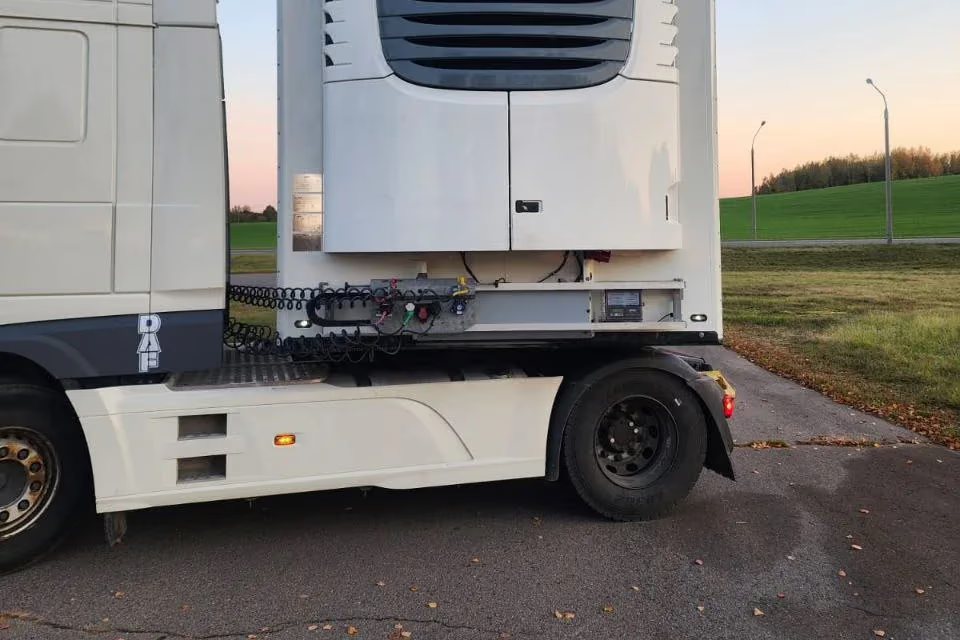
Transport selection must account for ambient temperatures along the route, journey duration, cargo volume, the required refrigeration-unit capacity and access to standby power at parking areas or terminals. Before loading, the cargo compartment is checked for cleanliness, intact seals, foreign odours and correct operation of the refrigeration unit. The result is recorded in an agreed form. This is not a product quality certificate; it records the vehicle's condition at a particular time.
Air must circulate freely through the designated channels. Blocked ducts, incorrect pallet heights, cargo packed tightly against the walls and damaged packaging can create hot or cold spots. Agree the stowage plan before loading, especially for a mixed shipment. Temperature-sensitive cargo pieces should not be placed in the direct cold-air stream without a risk assessment. For consolidated freight, compatibility of the required conditions must also be checked; an identical set point alone does not mean that the goods can travel together.
How to organise temperature monitoring
The refrigeration unit’s sensor indicates equipment operation but may not represent the temperature inside a pallet or at the far end of the cargo compartment. Independent data loggers are therefore used for significant shipments. Their number and placement depend on shipment size, packaging, risk assessment and the cargo owner’s requirements. Record each device ID, activation time and position before dispatch. After delivery, retrieve and retain the data with the transport documents.
Real-time alerts are useful only if the recipient and the response threshold are defined in advance. A brief reading change when a door opens presents a different risk from a prolonged out-of-range temperature. After a temperature excursion, an authorised person decides whether the product remains suitable based on product data and the duration and magnitude of the deviation. The driver or dispatcher must not independently declare the product safe or unfit.
Bystrox · Belarus and China
Calculate route and cost
Share the cargo details, route points, and target dates. Our team will clarify the requirements and propose a workable transport plan.
Route, transshipments and border procedures
On the long China–Belarus route, waiting locations matter as much as distance. Before departure, the plan identifies points where queues, transshipment between vehicles, inspections or temporary disconnection of the tractor unit may occur. Access to power, fuel, technical assistance and secure parking is confirmed for every stage. For a multimodal movement, the refrigerated container's specifications and each operator's responsibility for temperature control are checked separately.
Opening the cargo compartment during an inspection may affect internal conditions. The plan should provide for prompt closure, time recording and seal checks. Customs and other control authorities act within their powers, so a logistics provider cannot promise that no inspection will take place. Its role is to prepare legible documents, ensure that responsible contacts are available and minimise operational delay without obstructing mandatory procedures.
Documents and distribution of responsibilities
The basic commercial document set normally includes the contract documents, commercial invoice, packing list and transport document. Additional evidence of origin, safety, veterinary or phytosanitary controls, registration or conformity may be required. The exact list depends on the goods code, composition, intended use, condition and country of origin. Confirm it with a customs representative and the competent authorities before dispatch, not after the vehicle arrives.
What to include in the transport instructions
- Specified temperature range and units, refrigeration-unit operating mode and a prohibition on unauthorised changes.
- Pre-loading inspection procedure and confirmation of the temperature of the goods.
- The cargo layout, sealing procedure and data logger placement plan.
- Status-reporting frequency, alarm thresholds and escalation sequence.
- Procedure for issuing temperature reports and storing records.
- Actions in case of breakdown, delay, inspection and damage to packaging.
Checklist before booking refrigerated transport
Confirm the product specification and regulatory restrictions first, then select the packaging and route. Provide the carrier with the actual dimensions, weight, pallet count, temperature range, addresses and site opening hours. State separately whether independent data loggers, real-time monitoring, contingency arrangements and a post-delivery report are required. Cost depends on the season, equipment availability, temperature settings, route, waiting time and additional operations; without these details, comparable pricing is impossible.
At receipt, check the seal, packaging condition, readings and availability of the logger files before the equipment is returned or the devices are misplaced. Record any exceptions immediately with photographs and a formal report in accordance with the contractual procedure. If there is a temperature excursion, the goods are isolated in suitable conditions until the decision of the responsible specialist. This procedure protects the cold chain better than trying to find the culprit without storing the data.
Key points in 30 seconds
- The manufacturer or cargo owner specifies the temperature range from the requirements for the particular product; the carrier must not apply a generic setting.
- The cold chain covers product preparation, packaging, loading, transit, transshipment and receipt—not only operation of the refrigeration equipment.
- Continuous temperature recording is useful only when accompanied by defined logger placement, data retrieval and deviation-response procedures.
- Check all mandatory requirements for pharmaceuticals, food products and other regulated goods separately before booking.
Questions on this topic
Who determines the transport temperature?
The manufacturer or cargo owner specifies the temperature conditions from the product documentation and applicable requirements. The carrier confirms that its equipment can maintain the agreed conditions.
Are the readings from the reefer's built-in sensor sufficient?
Not always. It indicates refrigeration-unit operation but may not show the temperature throughout the cargo. Use independent data loggers positioned according to an agreed monitoring plan.
Is it possible to combine different types of chilled goods?
Only after checking the temperature range, odour compatibility, humidity, sanitary compatibility and handling rules. A shared temperature set point alone is insufficient.
What to do if the temperature goes beyond the limits?
Keep the goods under the specified conditions, retrieve the data, document the event and refer the decision to an authorised specialist appointed by the cargo owner. Product suitability must not be determined from a single reading alone.
Need a route quote?
Share cargo details and deadlines — we will propose a transport plan and commercial offer.