Consolidated Freight from China to Belarus
How LTL Consolidation Works
How LTL from China works: consolidation warehouses, chargeable weight, packaging, documents, transshipment risks, and comparison with a dedicated truck.
February 24, 2026 · 9 min read
How LTL from China works: consolidation warehouses, chargeable weight, packaging, documents, transshipment risks, and comparison with a dedicated truck.
What LTL Is and When It Works
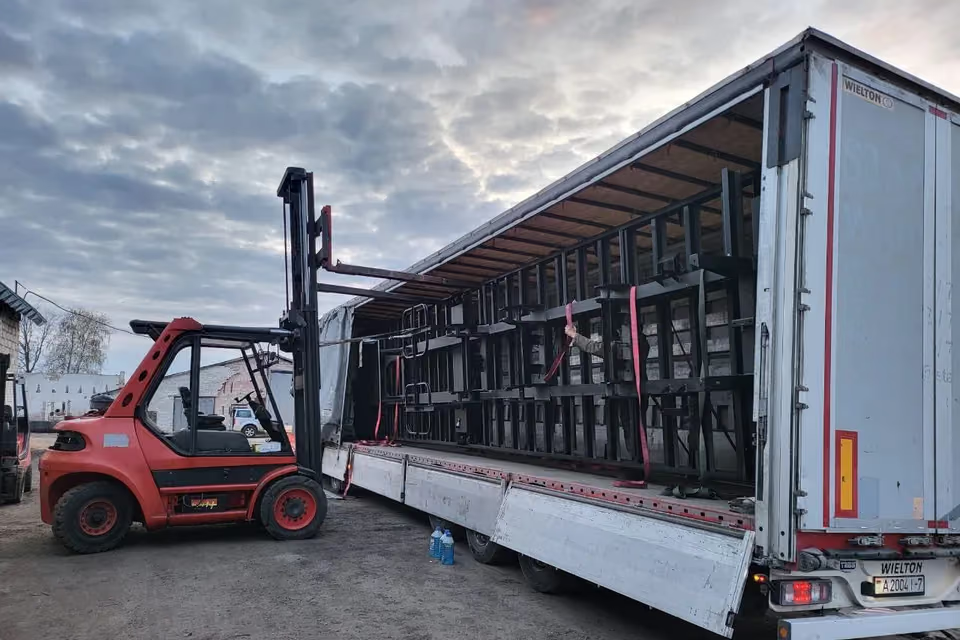
LTL is less-than-truckload transport in which shipments from different customers share one vehicle. In a China supply chain, it normally includes collection from one or more suppliers, delivery to a consolidation warehouse, receipt, cargo consolidation, the international leg, and subsequent distribution. A specific service may involve multiple warehouses and a carrier change.
Consolidated freight is useful when a shipment does not fill a dedicated truck and the customer can accept additional handling and a less rigid schedule. It allows smaller purchases to ship without accumulating stock merely to fill a vehicle. But “pay only for space used” needs qualification: price may depend on weight, volume, loading metres, package count, cargo characteristics, and a minimum charge.
How Consolidation Works in China
Typical sequence:
- the supplier confirms readiness date, packaging, dimensions, and weight;
- the cargo is collected or delivered by the supplier to the agreed warehouse;
- the warehouse counts packages and checks visible condition and markings;
- data is reconciled with the invoice and packing list;
- agreed repacking or palletisation is performed where required;
- shipments are consolidated into transport and documented for onward movement;
- after arrival, cargo is deconsolidated and released for final delivery.
Warehouse receipt is not product quality control unless a separate inspection is ordered. The warehouse may confirm box count and visible condition but is not required to open packages or check model and functionality. Agree in advance the inspection scope, photographs, contents count, and whether repacking is permitted. Otherwise, buyer expectations will not match the operation actually performed.
Actual Weight, Volumetric Weight, and Loading Metres
Light but bulky cargo consumes substantial vehicle space, so carriers use chargeable measurements. Volumetric weight is calculated from volume using an agreed factor or divisor. Road freight may also use loading metres: the share of deck length occupied, accounting for any inability to stack above the shipment. No universal factor applies to every route and carrier.
For example, two shipments of identical actual weight may cost differently if one is compactly palletised while the other consists of long or non-stackable packages. Calculate using final packed dimensions. Before booking, obtain the formula, units, rounding rules, minimum chargeable volume, and surcharges for non-standard packages. These matter more than an advertised “per kilogram” rate.
For a verifiable calculation, provide:
- length, width, height, and weight of every package;
- pallet count and stackability;
- projections, long packages, and any offset centre of gravity;
- cargo type, value, and special handling conditions;
- collection and delivery addresses, readiness date, and preferred receipt window.
Bystrox · Belarus and China
Calculate route and cost
Share the cargo details, route points, and target dates. Our team will clarify the requirements and propose a workable transport plan.
Packaging and Marking for Multiple Transfers
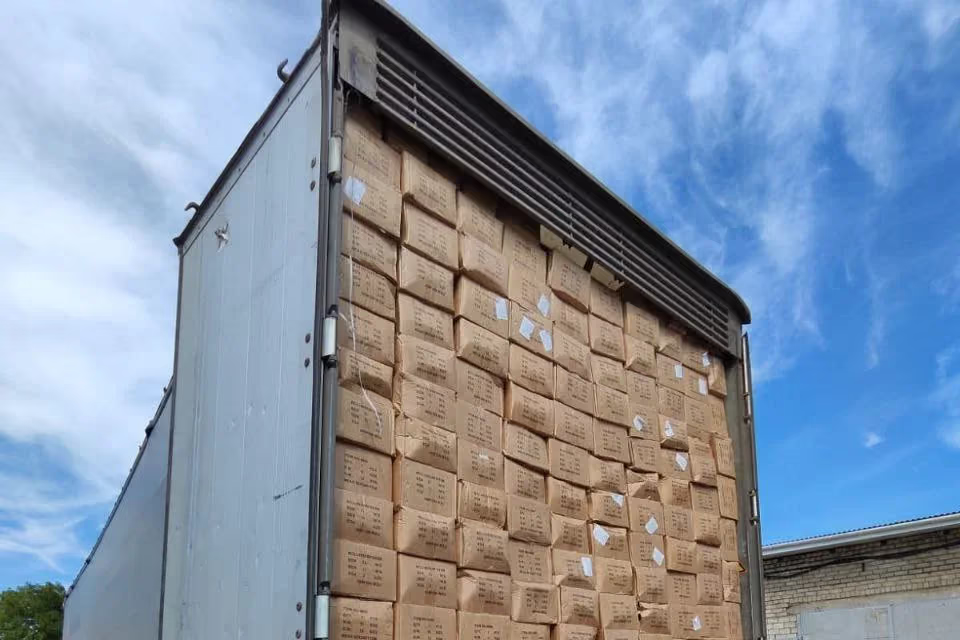
LTL freight is handled at warehouses more often than a direct full truckload. Packaging must withstand forklift handling, contact with adjacent packages, and securing. A thin retail carton may be suitable for sale but not for a long international chain. Pallets, crates, reinforced cases, corner protection, or internal cushioning should be selected for the product, not from a single template.
Mark every package with a unique identifier linked to the packing list and consignee. Remove or cover old labels. For wood packaging, check applicable phytosanitary requirements. Disclose fragile, liquid, magnetic, temperature-controlled, or battery-containing goods before receipt because the warehouse and carrier may impose restrictions.
Documents and Co-loading Risks
The invoice and packing list must unambiguously link goods to specific packages. Different suppliers may use different names and units, so the importer should standardise data in advance. Check codes, permits, and restrictions for every product. The presence of other shipments in the vehicle does not exempt the importer from requirements for its own goods.
Risks to allocate in the booking:
- damage during transshipment and liability limits;
- differences between actual and declared dimensions;
- waiting for other shipments or documents;
- rejection of co-loading because goods are incompatible;
- storage during dispatch or clearance delays;
- procedure for shortages or damaged packaging.
When to Compare LTL with a Dedicated Truck or Container
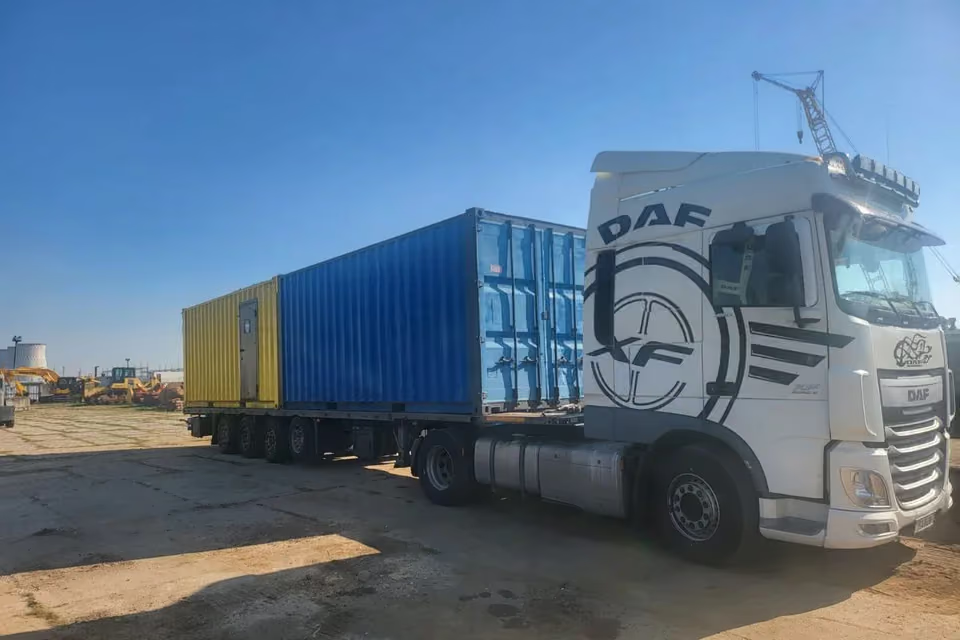
As volume grows, the consolidated rate approaches the cost of dedicated transport, but the break-even point varies by route and market. A dedicated truck reduces shared handling and provides more control, but requires sufficient volume and available capacity. A container may suit an appropriate shipment and multimodal route. Compare the total door-to-door cost, including pre-carriage, warehousing, transshipment, clearance, and possible storage.
LTL is usually chosen not only for minimum price but also to support regular small purchases. Update shipment dimensions before each cycle and request an alternative quotation. Timing depends on consolidation readiness, route, season, carrier capacity, border conditions, and customs processing. Confirm current product, packaging, and document requirements before handing cargo to the warehouse.
Key points in 30 seconds
- LTL means several shippers share vehicle capacity; it does not automatically mean charging only by actual weight.
- The chargeable basis may use volumetric weight or loading metres; obtain the formula and factor before booking.
- Every consolidation and transshipment increases the demands on packaging, marking, and package control.
- As shipment size grows, compare LTL again with a dedicated truck or container on total cost and risk.
Questions on this topic
Is LTL always charged only by actual kilograms?
Not always. The carrier may apply volumetric weight, loading metres, a minimum charge, and surcharges. Obtain the formula before booking.
Can goods from several Chinese suppliers be consolidated?
Yes, if the warehouse accepts such shipments, documents are aligned, and the goods are compatible under transport conditions and restrictions.
Does the consolidation warehouse inspect product quality?
Only if the service is agreed separately. Standard receipt is usually limited to package count, markings, and visible packaging condition.
When is a dedicated truck better value than LTL?
There is no universal threshold. Compare final dimensions, route, timing, cargo characteristics, and the total cost of both options.
Why can LTL transit time change?
It is affected by readiness of all consolidation operations, the route, season, available capacity, border conditions, and customs processing.
Need a route quote?
Share cargo details and deadlines — we will propose a transport plan and commercial offer.