FTL or LTL
choosing a road-freight format from China
A comparison of dedicated full truckload (FTL) and consolidated less-than-truckload (LTL) road freight: cost, timing, consolidation, risks and quotation data.
April 16, 2026 · 10 min read
A comparison of dedicated full truckload (FTL) and consolidated less-than-truckload (LTL) road freight: cost, timing, consolidation, risks and quotation data.
What FTL and LTL actually mean
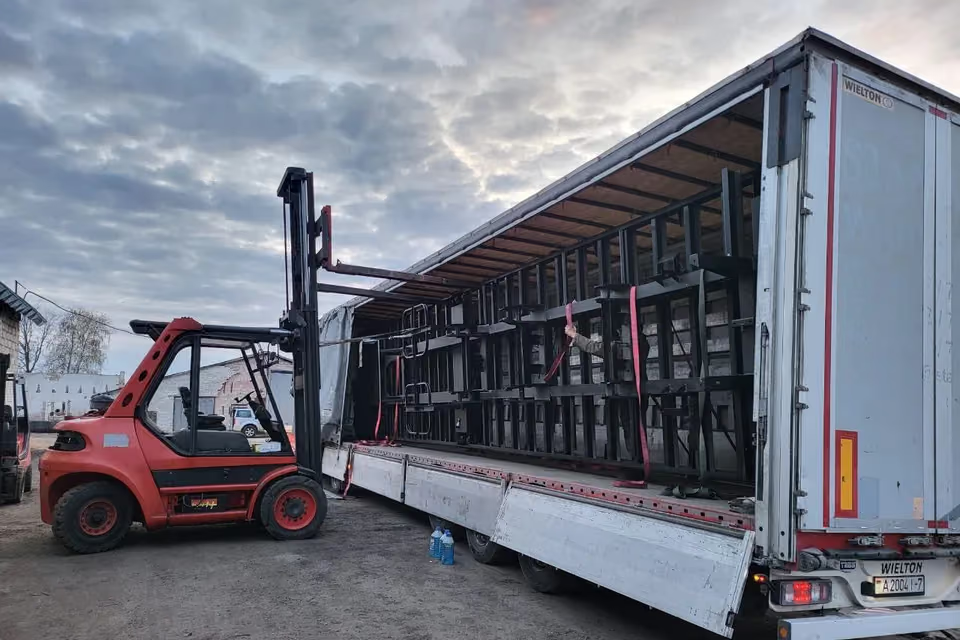
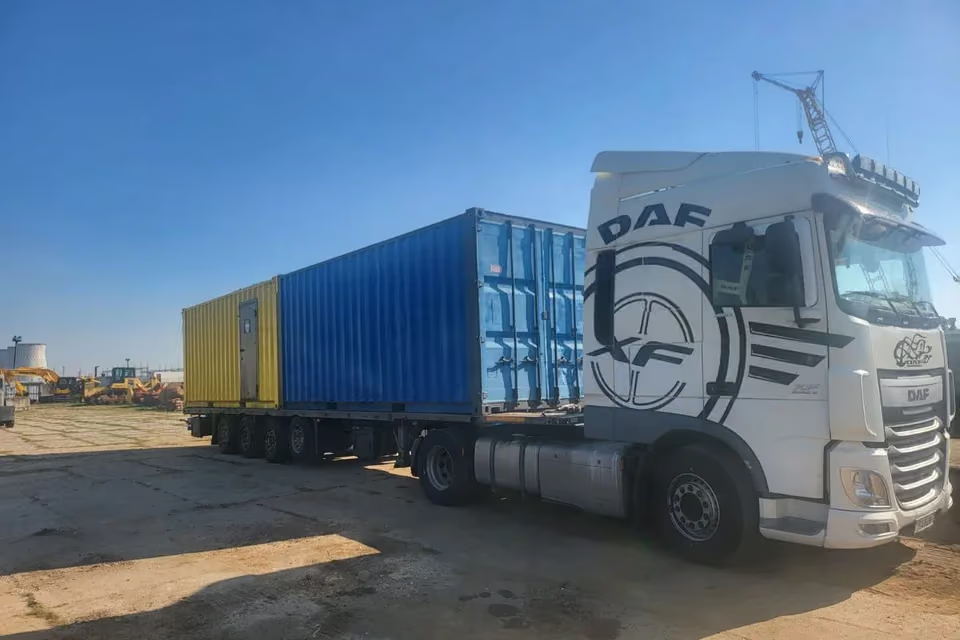
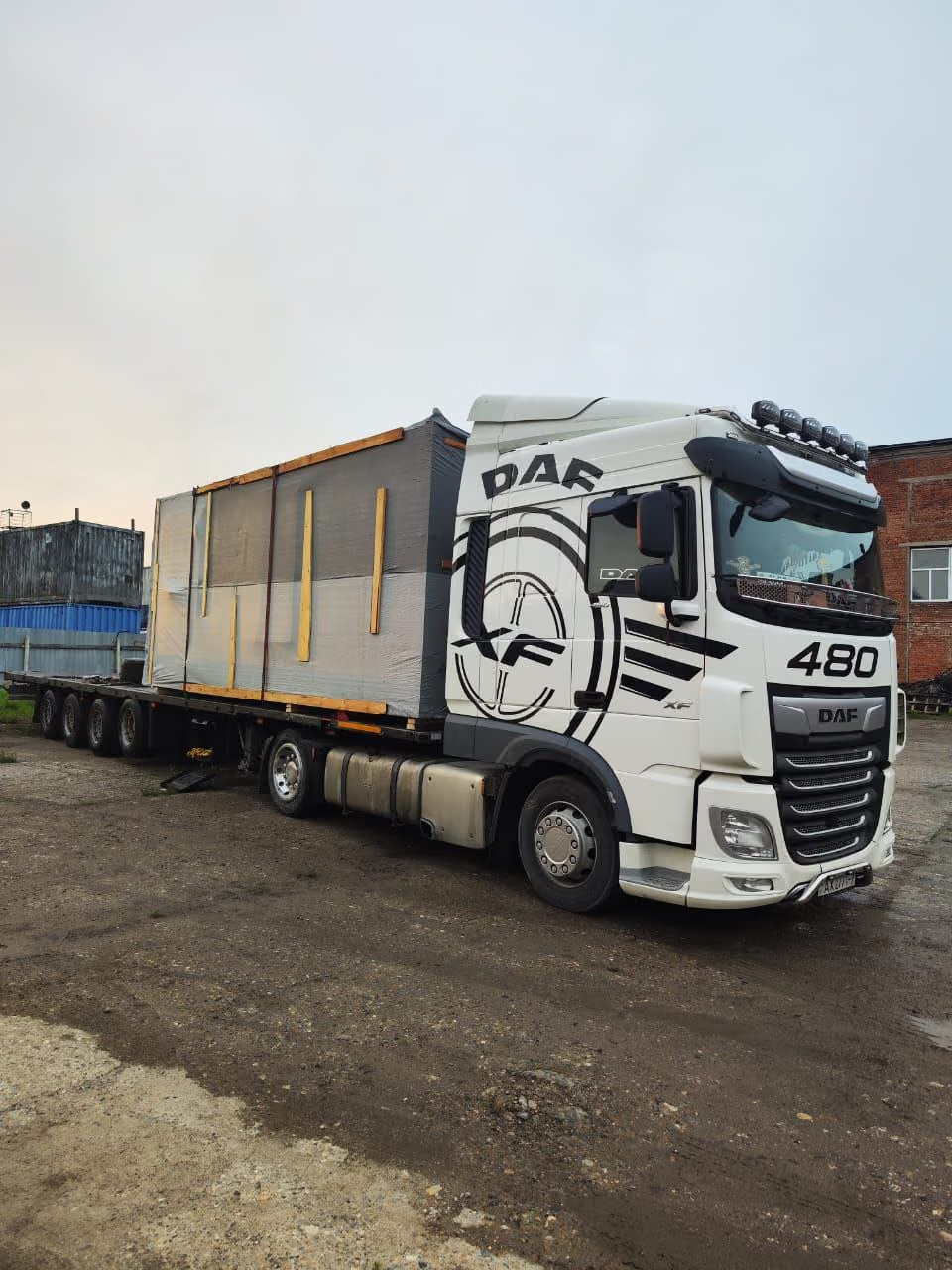
Full truckload (FTL) means that a dedicated vehicle is allocated to the shipment. The truck may be fully or partly loaded: the defining feature is not its fill percentage but the absence of commercial cargo from other customers. The shipper and consignee agree on the loading and unloading points, body type, cargo layout, securing and sealing. FTL is useful when a direct schedule, fewer transshipments or special handling conditions are important.
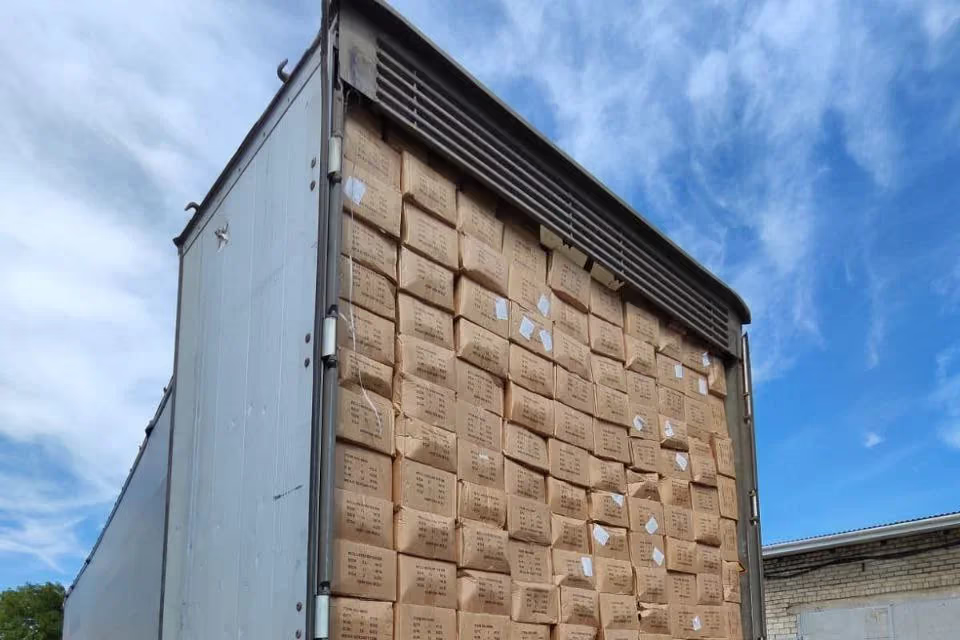
Less-than-truckload (LTL) means moving a consignment as part of a consolidated road shipment. The cargo undergoes carrier acceptance or is collected from the supplier, combined with compatible consignments and then delivered to consignees or handed to the next transport leg. Less-than-container load (LCL) also shares capacity but applies to a container. LTL and LCL are not interchangeable: they use different equipment, terminal processes and documents.
Advantages and limitations of a dedicated truck
FTL enables a more direct operating plan. Fewer intermediate warehouse operations mean less handling of cargo pieces and simpler investigation if damage occurs. The vehicle body can be selected for cargo height, side or top loading, temperature control and securing requirements. For expensive equipment, fragile products, large quantities and deliveries to a specific production window, these benefits may be more important than the difference in rate.
The customer pays for the entire truck even when its capacity is not fully used, so a small shipment may have a high cost per kilogram or cubic metre. Transit time depends on suitable vehicle availability, backhaul balance, the route, borders and mandatory inspections. A dedicated truck removes some handling stages but does not eliminate customs procedures or guarantee an arrival date.
When less-than-truckload (LTL) works better
LTL allows purchases to move in small lots without waiting to accumulate a full truckload. It can suit trial shipments, spare parts, regular stock replenishment and working-capital management. Pricing accounts for occupied space, weight, density, route and handling. Shared vehicle capacity creates potential savings, but collection, warehousing, labelling and final delivery must be included in the comparison.
The main trade-off is the additional handling stages. A shipment may wait for other cargo and pass through carrier acceptance, consolidation and sometimes intermediate sorting. Transit time depends on the departure schedule and all parties having their documents ready. Incorrect marks or unsuitable packaging increase the risk of misrouting and damage. Reliable LTL therefore starts with transparent warehouse schedules and acceptance rules, not the lowest quote.
Cargo requires a separate LTL suitability check if it
- Is fragile, has an unusual centre of gravity or must not be stacked.
- Is sensitive to odours, moisture, temperature or neighbouring goods.
- Contains batteries, liquids, chemicals or other potentially regulated components.
- Has protruding parts, weak shipping packaging, or non-standard grip points.
- Expensive and requires special sealing, security or insurance conditions.
Bystrox · Belarus and China
Calculate route and cost
Share the cargo details, route points, and target dates. Our team will clarify the requirements and propose a workable transport plan.
How to find the transition point from LTL to FTL
There is no universal threshold in kilograms. Truck capacity may be constrained by volume, weight, cargo-piece length or non-stackability. Request two quotations on identical terms: LTL for the actual shipment and FTL using a suitable vehicle body. Add every cost from the supplier’s door to the consignee’s door, including warehousing, waiting time, loading, insurance and additional documents. Assess the cost impact of a longer transit time and additional transshipments separately.
FTL may become preferable before the truck is physically full—for example, when one delayed component would stop a production line or damage to high-value equipment would be unacceptable. In other circumstances, frequent LTL shipments may cost less than holding a large inventory. The decision concerns the economics of the entire supply, not the freight rate alone. Compare the landed logistics cost per unit with the cost of carrying inventory over time.
How to prepare cargo for groupage shipment
Each cargo piece must carry durable marks identifying the shipment and consignee. Packaging must withstand mechanical handling, vibration and contact with neighbouring cargo pieces. The pallet is formed without overhangs, unless otherwise agreed, and small elements are fixed inside. Photos are taken before the packaging is closed, after it is completed and upon transfer to the warehouse. If the load cannot be placed in several tiers, this is indicated both visually and in the instructions.
The warehouse receives a packing list in advance stating the number, dimensions and weight of every cargo piece. The actual details may be rechecked and may affect the price if they differ from the booking request. Before the shipment arrives, the parties agree on receiving hours, record-keeping requirements, whether wood packaging is accepted and the procedure for a damaged cargo piece. For regulated goods, transport acceptance and the required documents are confirmed before the cargo is sent for consolidation.
A selection process for importers
Six consecutive steps
- Collect the exact dimensions, weight, packaging, value and characteristics of every cargo piece.
- Define the latest acceptable arrival date and the consequences of delay or damage.
- Check the cargo’s suitability for consolidated road freight and the availability of insurance.
- Request FTL and LTL quotations for identical origin and destination points and a complete list of charges.
- Compare not only the rate but also handling, time buffer and administrative workload.
- Document the marks, status updates, required documents and deviation-response procedure.
For regular procurement, reassess the decision as shipment size grows. Several LTL consignments can be combined into planned FTL movements if this does not reduce stock availability. The reverse may be appropriate when demand is unstable and capital tied up in inventory costs more than transport. Rates, schedules and truck availability change, so do not carry last quarter’s calculation into a new shipment automatically.
Key points in 30 seconds
- FTL provides a dedicated truck for one shipment; LTL uses part of a truck alongside compatible cargo from other customers.
- LTL makes small shipments practical but adds consolidation, handling and dependence on the departure schedule.
- There is no universal weight threshold: the decision changes where the total cost and risk of LTL compare with those of FTL.
- LTL refers to truck capacity and LCL to container capacity; the terms are not interchangeable.
Questions on this topic
Does FTL necessarily mean the truck is fully loaded?
No. FTL means a dedicated truck for one shipment. The customer may use only part of its capacity, but no commercial cargo from other shippers is added.
At what weight does FTL become cost-effective?
There is no universal threshold. The result depends on volume, density, cargo-piece length, route, season, handling and the cost of risk. Both formats must be quoted and compared in parallel.
Why can LTL take longer?
The shipment undergoes carrier acceptance and consolidation, depends on the departure schedule and may require intermediate sorting. Confirm the route and transit-time range before booking.
Is it possible to send dangerous goods by LTL?
It may be possible, depending on classification, packaging, compatibility, route and carrier acceptance. Confirm all requirements before handing the cargo to the consolidation warehouse.
Need a route quote?
Share cargo details and deadlines — we will propose a transport plan and commercial offer.